
Independent software studio · Punjab, India

Know Why, Iterate, Build.

We start things because we want to find out. We finish them because half-built answers aren't answers.

Overhead illustration of a maker's workbench with sketches, a laptop and loose notes
most of it never ships. that's the point.

01 — premise

Most software gets built because someone asked for it. Ours gets built because something wouldn't leave us alone — a question about whether a thing was possible, or possible cheaply, or possible for people who don't speak English to a computer.

Curiosity is the easy half. The hard half is being able to finish: to take the interesting question all the way down to a thing that runs on a Tuesday, for a stranger, without you in the room. That second half is what makes a studio rather than a hobby.

02 — method

Three moves, in that order

The name is the process. It's an acrostic because we needed to remember it, not because it looked good on a slide.

  1. K

    Know Why

    Before writing anything, find the actual constraint. Usually it isn't the one in the brief. On a voice agent everyone optimises the language model; the bill is really speech synthesis, charged per character. Getting that ordering right decided the whole architecture.

  2. I

    Iterate

    Build the smallest thing that can be wrong in public, then let it be wrong. We keep a harness that runs the whole system without the expensive parts attached, so a bad idea costs minutes instead of invoices.

  3. B

    Build

    Finish it. Handle the ugly cases — the person who interrupts, the answer machine, the network that drops mid-sentence. The gap between a demo and a product is entirely made of these.

03 — evidence

Things that survived the process

Two shipped, one in the workshop. Each started as a question we couldn't put down.

Illustration of a shield built from book pages

“Why does everything you learn from a video evaporate in a week?”

Ripostiq

Learn it. Build it. Defend it.

A tutor that lives inside your AI assistant. It adapts to you, makes you build something real, then refuses to pass you until you can defend the work to a stakeholder who pushes back.

  • Runs as an MCP connector inside Claude & ChatGPT
  • Boss battles instead of quizzes
  • A journal that never forgets what you struggled with

ripostiq.com
Illustration of doodle characters leaping out of a phone screen

“Why does one short video need a camera, an editor and a timeline?”

Doodliq

Type a topic. Get a quiz reel.

Animated quiz reels with hand-drawn mascots, in your brand colours, written by an AI that knows the format. No camera, no editor, no timeline — three clicks and it renders.

  • A cast of hand-drawn mascots, not stock avatars
  • Brand kit in, on-brand reel out
  • Buy reels, not another subscription
doodliq.com
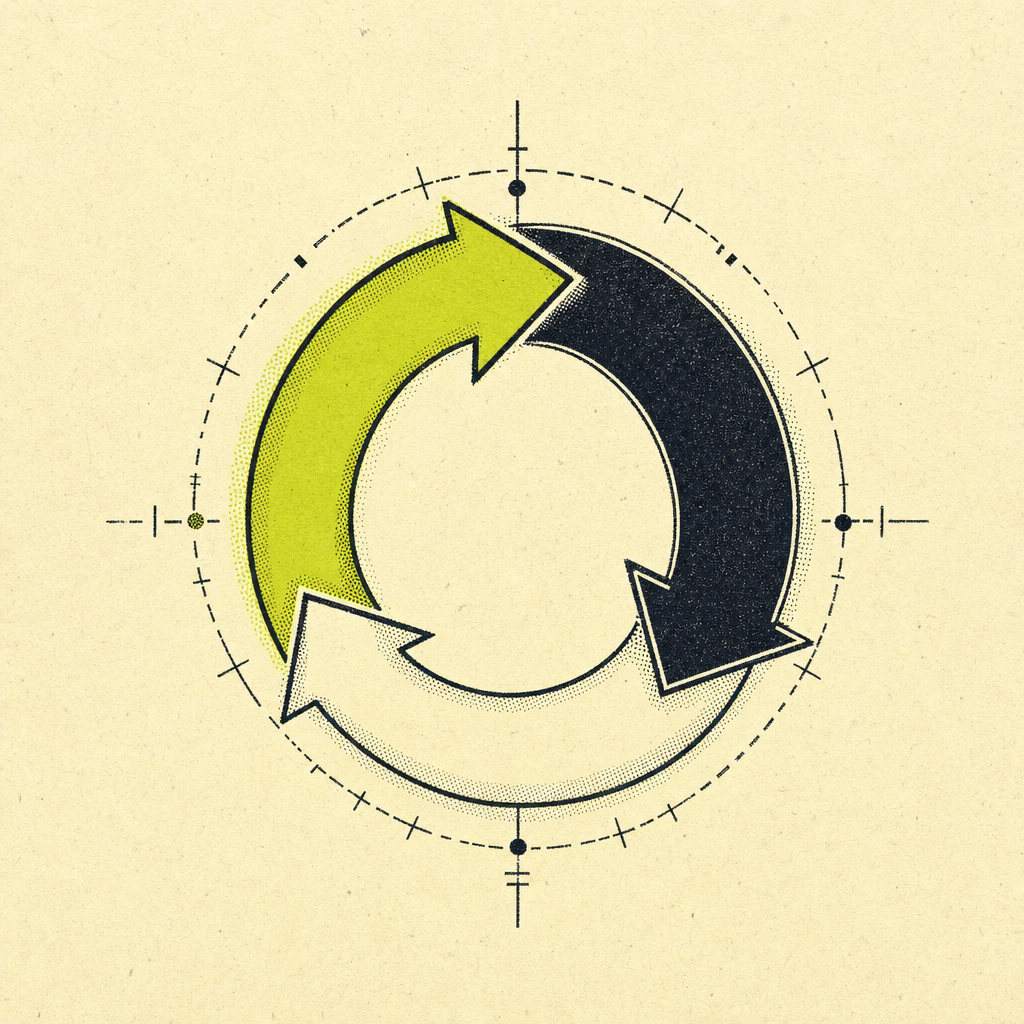
Diagram of three arrows in an iteration loop

“Can a phone call in Hindi cost less than a cup of chai?”

Voice agent in the workshop

Real-time conversation, priced in paise.

A bot that phones a lead, qualifies them in Hindi or Hinglish, and hangs up knowing whether they're worth a salesperson's time. The interesting part was never the conversation — it was the economics.

  • Speech, reasoning and synthesis, under a second
  • Interruptible mid-sentence, like an actual human
  • Every call reports what it cost, to the paisa

04 — craft

How you can tell we finished it

Anyone can describe a system. These are the details that only show up if you actually built one.

Cost is a design material

Speech synthesis bills per character, so scripted lines are rendered once and replayed forever. That single decision moved a call from ₹2.92 to ₹1.4 a minute — measured on real calls, not modelled in a spreadsheet.

Hindi isn't a translation layer

Indian callers switch language mid-sentence. So the system transcribes Hinglish as Hinglish rather than forcing it into one script — and the voice on the other end was chosen by listening, not by reading a spec sheet.

We test the thing we ship

Every product has a way to exercise it end to end without the expensive parts connected. It's how you find the bug that only appears when a real person interrupts at the wrong moment.

Numbers, or it didn't happen

If we claim a thing is fast or cheap, there's a measurement behind it and a way for you to re-run it. Confidence without instrumentation is just decoration.

05 — currently

Questions we haven't answered yet

The honest state of the workshop. Some of these become products. Most won't.

  • 01How cheap can a natural-sounding phone call in an Indian language actually get before it stops sounding human?
  • 02Can a piece of software tell whether you've genuinely understood something, or only that you can repeat it?
  • 03What's the smallest possible gap between having an idea for a video and it being posted?
  • 04Why do small teams still need a person to chase invoices?

Got a question
worth chasing?

We take on a small number of build projects a year, mostly where the problem is genuinely unsolved.

hello@kwiblabs.com